
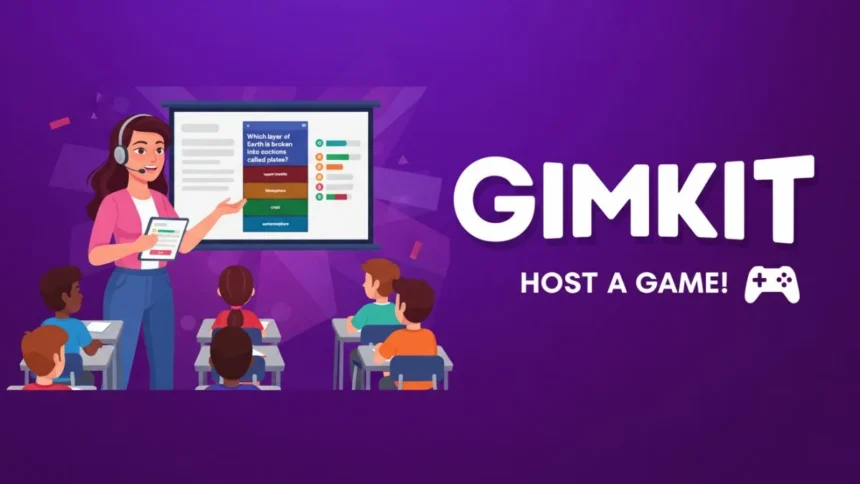
If you are a teacher looking for a quiz tool that students actually enjoy, you have likely encountered Gimkit. Created in 2017 by high school student Josh Feinsilber, this platform now serves over 10 million students globally. The person running the show is called the gimkit host, and that role comes with more control than you might expect.
What the Host Role Actually Means in Practice
Many educators assume hosting a Gimkit game is just about pressing start. The reality is more nuanced. A host selects a Kit — a question set — from the community library or builds one from scratch. They then choose a game mode: Classic for straightforward Q&A, Trust No One for a social-deduction twist, or The Floor is Lava for a fast-paced challenge.
Hosts also set time limits, decide how many questions appear, and toggle power-ups that let students earn in-game currency. The more useful approach is to enable Auto-Advance, which moves the class through questions automatically without waiting for the host to click. This keeps the pace brisk and reduces downtime.
One concrete example: a middle school science teacher might run a Classic mode game with 20 questions, a 10-minute timer, and power-ups disabled to focus on content. After the session, the host can pull a detailed report showing which questions stumped the class and which students need extra help.
| Game Mode | Best For | Host Control |
|---|---|---|
| Classic | Review and drill | Full timer and power-up settings |
| Trust No One | Team building and critical thinking | Limited; game-driven |
| The Floor is Lava | High-energy review | Time limit only |
Why Gimkit Hosts Are Especially Popular in US Middle and High Schools
Gimkit’s user base skews heavily toward American middle and high schools. The platform’s game mechanics — earning virtual money, buying upgrades, and competing on leaderboards — resonate with students aged 11 to 18. Teachers in these grades report higher engagement compared to traditional quiz tools.
The demographic relevance is not accidental. Feinsilber built Gimkit while still a student himself, so the design reflects what teenagers find motivating. Hosts can also integrate with Google Classroom and Clever, making roster import seamless. This reduces setup time, a key factor for busy teachers.
In 2023, Gimkit introduced a Pro tier that gives hosts advanced analytics, including question-level accuracy trends and individual student progress over time. Schools with 1:1 device programs find this particularly useful for formative assessment.
How the Platform’s Origins Shape Today’s Host Experience
Gimkit began as a side project by Josh Feinsilber, a high school student in Seattle. He wanted a study tool that felt less like homework and more like a video game. That origin explains several host features that seem unusual in educational software. For a broader factual overview, Gimkit – live learning game show lays out the key context
For instance, the in-game economy — students earn cash for correct answers and can spend it on power-ups — comes directly from Feinsilber’s gaming background. Hosts can disable this if they prefer a pure quiz, but the option remains. Another legacy is the community Kit library, where hosts share question sets freely. This crowdsourced model keeps the content fresh without requiring a large editorial team.
The weaker claim here is that Gimkit is just another quiz app. Its roots in student-driven design give it a distinct feel. Hosts who embrace the game elements often see higher participation than those who strip them away.
Lessons from a Real Incident: When a Host’s Settings Backfired
In 2022, a high school teacher in Texas ran a Trust No Noe game with 30 students. She enabled the “steal” power-up, which lets students take virtual money from classmates. Within minutes, the game devolved into accusations and hurt feelings. The host had to pause the session and debrief the class.
This incident illustrates a key lesson: host settings have real social consequences. Trust No One works best with older students who can handle deception mechanics. For younger groups, Classic mode with power-ups disabled is safer. The host’s job includes anticipating how game dynamics will affect classroom culture.
Gimkit’s support team later added a warning when hosts enable competitive power-ups in Trust No One. The platform now also offers a “Safe Mode” that removes player names from leaderboards. These changes came directly from host feedback after incidents like the one in Texas.
Frequently Asked Questions
How does Gimkit host differ from a Kahoot host?
A Gimkit host has more granular control over game mechanics, including power-ups and in-game currency. Kahoot focuses on speed-based scoring, while Gimkit allows hosts to choose from multiple game modes and adjust question pacing. Both platforms offer reports, but Gimkit’s Pro tier provides deeper analytics.
Is it safe for a teacher to host a Gimkit game with strangers?
Gimkit games are private by default. Only students with the game code or link can join. Hosts should avoid sharing codes publicly on social media. The platform does not allow random users to join without an invite, so safety risks are minimal when standard precautions are followed.
Is it true that Gimkit host can see students’ answers in real time?
Yes, but only in aggregate. During a live game, the host sees a dashboard showing overall class accuracy and question-by-question performance. Individual student answers are not displayed publicly. After the game, the host can download a detailed report with per-student data.
Who created Gimkit and why did they make it?
Josh Feinsilber created Gimkit in 2017 while he was a high school student in Seattle. He wanted a study tool that felt like playing a video game rather than doing homework. The platform was originally a side project and later grew into a company with a small team.
How much does a Gimkit host account cost?
Gimkit offers a free tier with basic features, including live games and limited reports. The Pro plan costs $4.99 per month or $35 per year and adds advanced analytics, AI question generation, and priority support. Schools can also purchase site licenses for broader access.