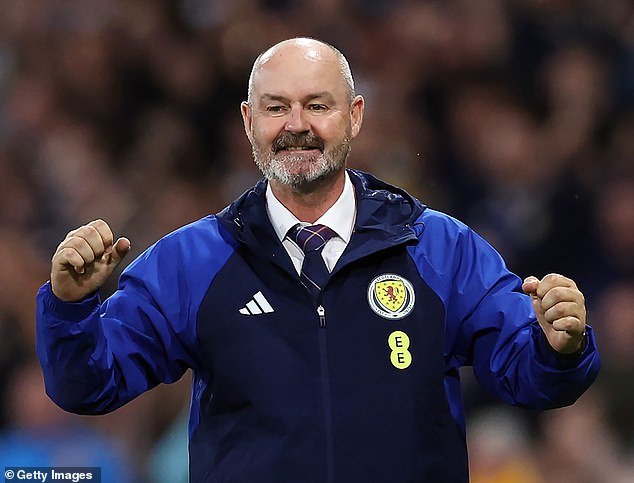
On 29 August 1963, a future Scottish football icon was born in Saltcoats. Steve Clarke would go on to become a respected defender and later a manager who ended Scotland’s 23-year wait for a major tournament appearance.
Clearing Up Common Misunderstandings About Steve Clarke’s Career
Some fans assume Clarke’s managerial success came only from his time at Chelsea as an assistant. In reality, he built a strong reputation as a head coach at West Bromwich Albion, guiding them to eighth place in the Premier League in 2013. Another misconception is that Clarke relies solely on defensive tactics. While his teams are organized, they also showed attacking flair during Scotland’s Euro 2020 qualifying campaign, scoring 20 goals in 10 group matches. Background on steve clarke is documented in Steve Clarke
How Steve Clarke Transformed Scotland’s National Team
When Clarke took over as Scotland manager in May 2019, the team had not qualified for a major tournament since the 1998 FIFA World Cup. He immediately instilled discipline and a clear tactical identity. Key players like Andy Robertson, John McGinn, and Scott McTominay thrived under his system. Clarke’s Scotland secured qualification for UEFA Euro 2020 via a penalty shootout win against Serbia in November 2020. He then led the team to UEFA Euro 2024, becoming the first Scotland manager to qualify for two consecutive European Championships.
What Is Confirmed and What Remains Unverified About His Methods
He has publicly stated his admiration for Italian defensive principles. However, claims that he never adjusts tactics during matches are unverified; match footage shows he makes substitutions and formation changes when needed. Another unverified rumor is that Clarke has a strained relationship with certain players. fifa. Background on steve clarke is documented in Scotland: Steve Clarke resigns after World Cup exit – BBC Sport
Key Milestones in Steve Clarke’s Football Journey
| Year | Event |
|---|---|
| 1982 | Made professional debut for St Mirren |
| 1987 | Signed for Chelsea, where he played for 11 seasons |
| 1997 | Won FA Cup with Chelsea |
| 2012 | Appointed manager of West Bromwich Albion |
| 2019 | Became Scotland national team manager |
| 2021 | Won Scottish PFA Manager of the Year |
Clarke’s playing career included spells at St Mirren, Chelsea, and a brief loan at Preston North End. After retiring, he served as assistant manager at Liverpool and Aston Villa before taking his first head coach role at West Brom. His appointment as Scotland manager marked a turning point for the national team.
Frequently Asked Questions
Is Steve Clarke still the Scotland manager in 2025?
Yes, as of 2025, Steve Clarke remains the Scotland national team manager. He led the team through Euro 2024, where they exited in the group stage, but the Scottish Football Association has retained him for the upcoming Nations League and World Cup qualifying campaigns.
How does Steve Clarke’s managerial style differ from his predecessor Alex McLeish?
Clarke is known for a more structured, defensive approach compared to McLeish’s more pragmatic style. Clarke emphasizes a consistent formation and set-piece organization, while McLeish often changed systems. Clarke also built a stronger team spirit and achieved better results in competitive matches.
Is it true that Steve Clarke had a falling out with a key player during Euro 2020?
This is a rumor without credible evidence. The squad appeared united, and Clarke publicly praised his players’ commitment throughout the tournament.
Why did Steve Clarke leave West Bromwich Albion in 2014?
Clarke was sacked by West Brom in December 2014 after a run of poor results. The team had won only one of their previous eight Premier League matches. Despite his earlier success, the board decided a change was needed to avoid relegation.
Where was Steve Clarke born and where did he grow up?
Steve Clarke was born in Saltcoats, North Ayrshire, Scotland. He grew up in the area and began his football career with local club St Mirren before moving to Chelsea. His Scottish roots remain strong, and he often speaks about his pride in representing his country as a manager.
Why Steve Clarke’s Tactical Approach Divides Opinion
Clarke’s pragmatic style has drawn both praise and criticism. Supporters point to Scotland’s defensive record under his tenure, which included clean sheets against top sides like Denmark and Ukraine. Critics argue that his cautious approach sometimes limits attacking potential, especially in matches where Scotland needs a goal. The debate intensified after Euro 2024, where Scotland scored only one goal in three group games. Still, Clarke’s overall record remains strong, with a win rate of around 40 percent in competitive fixtures.
What the Future Holds for Steve Clarke and Scotland
Looking ahead, Clarke faces the challenge of integrating younger talents like Billy Gilmour and Aaron Hickey into a squad that still relies on experienced players. The 2026 FIFA World Cup qualifying campaign will test his ability to evolve his tactics. Clarke has expressed confidence in the team’s development, emphasizing the importance of continuity. Whether he can lead Scotland to a first World Cup appearance since 1998 remains an open question, but his legacy as the manager who ended the long drought is already secure.